Crossnord Hybrid 3PL for Palletized B2B and Pick and Pack Fulfillment
A growing brand can outgrow its warehouse twice at the same time. One side of the business needs full pallets shipped to retailers, distributors, and wholesale partners. The other side needs single-unit orders picked, packed, labelled, and shipped to customers across the country.
Those two flows do not behave the same way.
Palletized B2B orders need dock space, freight coordination, compliance labels, appointment booking, and careful handling by case or pallet. Pick-and-pack orders need accurate item-level inventory, fast picking paths, packaging choices, parcel carrier cutoffs, and returns support.
A hybrid 3PL is built to do both under one operating model. That matters because more businesses now sell through multiple channels at once. A food brand may supply grocery distributors while selling variety packs online. A home goods company may ship pallets to retail stores and individual orders from its website. A parts supplier may send bulk replenishment to dealers and emergency replacement parts to end users.
Crossnord fulfils both palletized B2B orders and smaller pick-and-pack packages, which makes the hybrid model practical for businesses that do not fit neatly into one fulfilment category.

A hybrid 3PL connects wholesale and ecommerce fulfilment
Traditional 3PL providers often lean one way. Some are excellent at freight, pallets, and B2B shipping. Others focus on ecommerce fulfilment, where speed and item-level accuracy drive the operation.
A hybrid 3PL combines these strengths. It receives inventory, stores it, tracks it, and ships it in different formats depending on the order channel.
That can include:
Full pallet orders for distributors
Mixed-case orders for retail locations
Wholesale replenishment shipments
Ecommerce orders with one or more units
Subscription boxes or kits
Marketplace orders
Returns and exchanges
Seasonal bundles or promotional packs
The key is that all of these orders draw from the same controlled inventory pool. Instead of splitting stock between a “wholesale warehouse” and an “ecommerce warehouse,” a business can keep one clearer view of what is available.
This matters when demand shifts. If a retailer places a large replenishment order, the warehouse needs to reserve enough units without accidentally overselling online. If ecommerce orders spike after a promotion, the 3PL needs to keep shipping parcels without delaying scheduled freight.
A strong hybrid provider supports this with three core capabilities.
Warehouse systems that track inventory at multiple levels
The system needs to know how many units, cases, and pallets are available. It also needs to handle lot numbers, expiry dates, serial numbers, or batch codes when the product requires them.
Processes that match the order type
A pallet order should not move through the same physical path as a single t-shirt, bottle, or replacement part. Hybrid fulfilment works best when the warehouse layout separates bulk movement from item picking while keeping inventory connected.
Carrier and freight options that cover both sides
Parcel carriers, less-than-truckload freight, full truckload freight, and local delivery may all be part of the same shipping plan. The 3PL needs to select the right method for the order, not force every shipment into one lane.
Why palletized B2B orders need a different fulfilment mindset
Palletized B2B fulfilment is often less about order count and more about compliance, timing, and shipment integrity.
A single wholesale order may contain dozens of cases or several pallets. The order may need specific pallet height, wrapping standards, carton labels, packing slips, bill of lading requirements, or advance shipment notifications. Some retailers require routing through approved carriers or delivery appointments.
Mistakes can be expensive. A mislabelled pallet can cause chargebacks. A missed appointment can delay shelf availability. Poor wrapping can lead to damaged goods before the shipment even reaches the receiver.
Hybrid 3PLs handle these details by building B2B steps into the fulfilment process, not treating them as exceptions.
Typical B2B tasks include:
Case picking and pallet building
Pallet wrapping and labelling
Retail routing guide compliance
Freight documentation
Dock scheduling
Damage checks before loading
Inventory reservation for wholesale orders
For businesses selling into retail or distribution, this support can shorten the gap between getting a purchase order and delivering it correctly.
It also helps protect retail relationships. Large buyers expect consistency. They want orders to arrive complete, labelled properly, and ready to receive. When fulfilment creates friction, sales teams feel it quickly.

Why pick and pack needs speed, accuracy, and control
Pick-and-pack fulfilment has a different rhythm. Instead of moving bulk quantities, the warehouse handles many smaller orders.
Each order may include one item, several items, or a mix of variants. The picker needs to locate the exact SKU, confirm the quantity, choose suitable packaging, and send the parcel through the right carrier service.
The work looks simple from the outside, but it becomes complex as SKU counts grow.
A pick-and-pack operation must manage:
Individual item locations
Barcode scanning and order verification
Packaging rules
Inserts, samples, or promotional materials
Carrier rate selection
Same-day or next-day shipping cutoffs
Returns processing
Inventory updates across sales channels
Small errors can affect customer trust. Sending the wrong colour, size, flavour, or component creates more than a shipping cost. It creates a customer service issue, a return, and sometimes a lost repeat sale.
This is where hybrid fulfilment becomes useful for brands with both B2B and direct-to-consumer demand. The same product might leave the warehouse as a pallet on Monday and as a single parcel on Tuesday. The process must handle both without confusion.
For example, a natural skincare brand might ship cases of product to boutique retailers while also fulfilling online orders for individual creams and gift sets. Bulk orders need carton-level handling, while customer orders need careful packing and presentation. A hybrid 3PL can support both from the same inventory.
The main benefits of a dual fulfilment model
A hybrid 3PL is not just a warehouse with pallets on one side and parcels on the other. The value comes from how both flows work together.
Flexibility when channels change
Sales channels rarely grow in a straight line. A brand may start with ecommerce, then land a wholesale account. Another may begin with distributors, then add a direct online store to improve margins and customer relationships.
With separate fulfilment partners, each change adds complexity. Inventory has to be moved, split, reconciled, or duplicated. That can tie up cash and create stock imbalances.
A hybrid provider gives the business more room to adjust. If B2B volume grows, more stock can be directed to pallet or case orders. If online demand jumps during a promotion, the same facility can shift labour into parcel fulfilment.
This flexibility is especially useful during seasonal periods. A toy company, apparel brand, food producer, or consumer goods supplier may see retail orders arrive before peak season, followed by a wave of direct consumer orders. Both can be supported without building two separate logistics networks.
Efficiency from shared inventory
Inventory split across many locations can create hidden waste. One warehouse may have excess stock while another runs short. The business then has to transfer product, delay orders, or overbuy.
A hybrid model reduces that problem by keeping stock in a shared pool. The warehouse can allocate units based on confirmed demand and rules set by the business.
That does not mean every item sits in one undifferentiated pile. Good operations still use smart storage. Fast-moving ecommerce SKUs may sit in pick faces. Bulk inventory may remain in pallet racking. Slow-moving items may live in reserve locations.
The difference is that the system connects them. That creates a clearer picture of what can be sold, picked, packed, or reserved.
Cost-effectiveness across order types
Using separate providers can mean duplicate storage fees, duplicate receiving work, duplicate account management, and extra freight between facilities.
A hybrid 3PL can reduce those extra touches. Inventory is received once, stored in the right way, and shipped according to the order type.
Cost savings may come from:
Fewer transfers between warehouses
Better use of storage space
Consolidated receiving and handling
More efficient labour planning
Freight and parcel choices matched to each order
Lower risk of stockouts caused by split inventory
The biggest savings often come from avoiding complexity. When operations teams spend less time reconciling inventory across partners, they can focus on sales, purchasing, and customer experience.
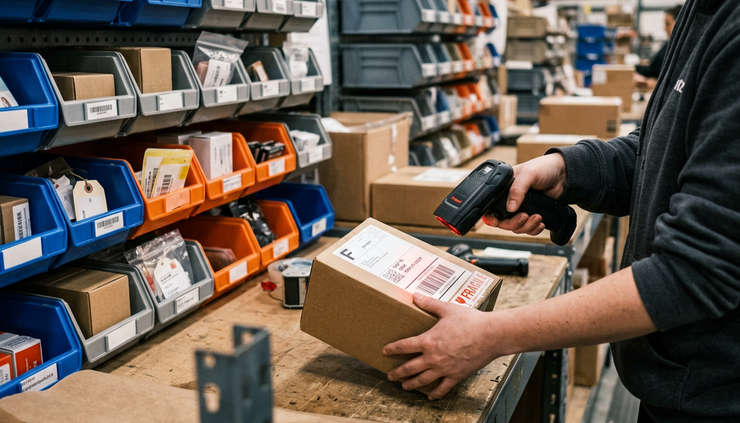
Real-world examples show where hybrid 3PLs make the biggest difference
The impact of hybrid fulfilment is easiest to see through common business situations. These examples are anonymized, but they reflect real operating patterns seen across consumer goods, industrial supply, food, health products, and retail distribution.
A consumer goods brand expands from ecommerce into retail
A Canadian home goods brand begins by selling through its own online store. Its fulfilment needs are classic pick and pack. Orders usually contain one to three items, packaging matters, and parcel speed affects customer reviews.
After strong online growth, a national retailer places an order for multiple store locations. The brand now needs case quantities, pallet preparation, retailer labels, and delivery windows.
If its 3PL only handles ecommerce parcels, the brand has to find another partner or temporarily manage the retail order itself. That can lead to rushed pallet building, inconsistent labels, and freight delays.
With a hybrid 3PL, the brand can keep using the same inventory pool. Ecommerce orders continue to ship, while the retail order is picked by case, wrapped, documented, and prepared for freight. The business adds a sales channel without rebuilding its logistics setup.
A food brand balances distributor orders with online variety packs
Food and beverage businesses often face mixed fulfilment needs. A distributor may order pallets of full cases. Online customers may order variety packs that combine several flavours.
The warehouse must manage lot tracking, expiry dates, carton integrity, and careful picking. A pure bulk warehouse may not want to build custom variety packs. A pure ecommerce warehouse may not be set up for pallet storage and freight.
A hybrid provider can support both. Pallets can be stored in racking, cases can be pulled for distributor orders, and individual units can be picked for variety packs. If product rotation is required, the system can help ensure older stock moves first according to the business rules.
For the food brand, this can improve cash flow. It can serve lower-volume online customers without giving up larger wholesale orders.
An industrial parts supplier supports dealers and urgent end users
Industrial parts often move through dealer networks, but urgent direct shipments still happen. A dealer may need a pallet of replenishment stock. A technician may need one replacement part shipped quickly to avoid downtime.
These orders require different handling. Bulk dealer shipments focus on carton count, freight reliability, and damage prevention. Urgent parcel orders focus on picking accuracy and carrier cutoff times.
A hybrid 3PL helps the supplier respond to both types of demand. It can prepare scheduled replenishment for dealers while still picking single parts for fast parcel delivery. This can protect service levels without forcing the company to maintain separate warehouses.
What to Consider When Choosing a Hybrid 3PL Partner
Effective hybrid warehouses demonstrate superior process management. A reliable provider should provide detailed explanations on how they manage the processes of receiving, storing, picking, packing, and shipping for various order types. Transparency in these areas is essential.
Essential capabilities to evaluate:
Capability | Importance |
Unit, case, and pallet tracking | Facilitates management of both small and large orders from a single inventory source. |
Barcode scanning | Minimizes errors and enhances inventory precision. |
B2B documentation support | Ensures compliance with retailer, distributor, and freight documentation requirements. |
Parcel carrier access | Offers appropriate shipping solutions for pick-and-pack orders. |
Freight coordination | Ensures efficient movement of palletized shipments. |
Returns handling | Safeguards inventory quality and enhances the customer experience. |
Clear reporting | Provides visibility into stock levels, order statuses, and exceptions. |
Crossnord’s hybrid approach fits the way modern businesses sell
Many businesses no longer choose between wholesale and ecommerce. They sell to retailers, distributors, marketplaces, business buyers, and direct customers at the same time.
That mixed model creates pressure. Inventory must stay accurate. Orders must leave on time. Costs must stay under control. Customer expectations keep rising, whether the shipment is a full pallet or a small box.
Crossnord Hybrid 3PL for Palletized B2B and Pick and Pack Fulfillment addresses that reality by supporting both sides of fulfilment. For a business owner, that means fewer handoffs and a simpler path to growth. For logistics teams, it means one partner can manage the practical differences between bulk shipping and parcel fulfilment.
The best results come when the 3PL gets involved before volume becomes painful. Product data, packaging rules, shipping preferences, retailer requirements, and forecast patterns all shape the operation. Sharing that information early helps the warehouse design a fulfilment flow that works before peak demand arrives.
A hybrid 3PL turns mixed demand into a manageable operation
Palletized B2B fulfilment and pick-and-pack fulfilment ask different things from a warehouse. One needs freight discipline, bulk handling, and compliance. The other needs item-level accuracy, fast parcel processing, and careful packing.
A hybrid 3PL brings those workflows together without treating one as an afterthought. That gives growing businesses more flexibility, better inventory control, and a more cost-effective way to serve multiple sales channels.
For brands balancing wholesale accounts, ecommerce orders, and changing demand, the question is no longer whether the business needs pallet or parcel support. It often needs both, and the right fulfilment partner should be ready for both from the start.